


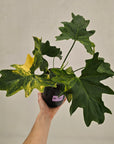
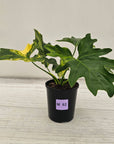
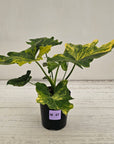
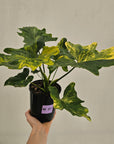
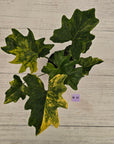
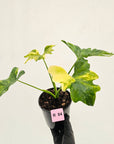
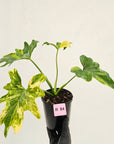
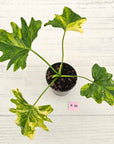
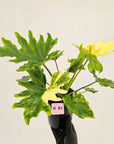
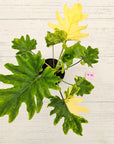


Philodendron bipinnatifidum variegata - SALE
Please review photos carefully as some plants have previous damage and levels of variegation vary.
Commonly known as the variegated split-leaf philodendron, is a striking tropical plant renowned for its dramatic, deeply lobed leaves with irregular creamy-white or yellow variegation against rich green foliage. This plant can grow into a sizeable statement piece, with mature leaves developing pronounced splits and a glossy texture. Its bold form and variegation make it a popular choice among collectors and interior plant enthusiasts.
Key characteristics:
-
Leaf shape: Large, deeply lobed, fenestrated (split) leaves
-
Leaf colour: Green with cream or yellow variegation; variegation can be irregular
-
Growth habit: Upright and clumping, can reach several meters in height under ideal conditions
-
Stem: Thick, sturdy, sometimes with aerial roots in mature specimens
-
Origin: Native to tropical South America
Care Plan
Light:
Bright, indirect light is ideal. Avoid direct harsh sun, which can scorch variegated portions of the leaves. Lower light will slow growth and reduce variegation intensity.
Watering:
Allow the top 5–7 cm of soil to dry between waterings. Water thoroughly and ensure excess water drains freely. Overwatering can cause root rot, especially in variegated forms.
Humidity:
High humidity is preferred (60–80%). Mist occasionally or use a humidifier if indoor air is dry.
Temperature:
Optimal growth occurs in 18–28°C. Avoid temperatures below 12°C, which can damage leaves and stunt growth.
Soil:
Use a well-draining, airy mix such as aroid mix with components like pine bark, perlite, and coco coir.
Fertilisation:
Feed with a balanced liquid fertiliser diluted to half strength every 4–6 weeks during the growing season (spring and summer). Reduce feeding in winter.
Repotting:
Repot every 2–3 years or when root-bound. Handle roots gently as variegated plants can be more sensitive to stress.